 Accessibility Information
About
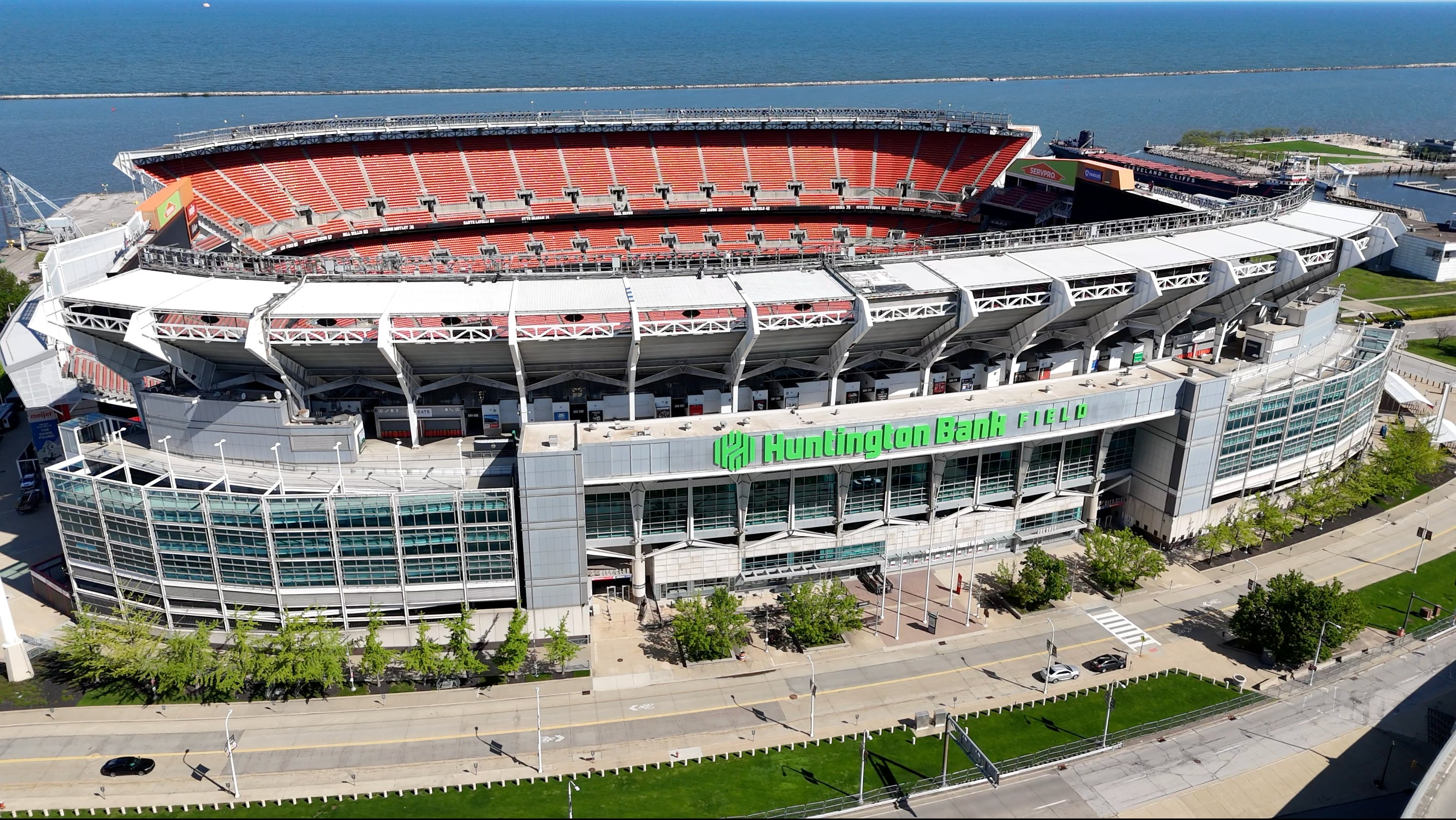
Huntington Bank Field is the home of the Cleveland Browns, a multipurpose stadium on the shore of Lake Erie at 100 Alfred Lerner Way. Construction began on 15 May 1997 and the stadium opened on 12 September 1999, when the Browns faced the Pittsburgh Steelers in the game that marked the return of professional football to Cleveland. A $120 million renovation across two phases in 2014 and 2015 brought larger video boards, a new sound system, expanded lower bowl seating and new escalators. The Ring of Honor, added in 2010, carries the names of the franchise's Pro Football Hall of Famers in the upper deck. In September 2024 the Browns and Huntington National Bank announced a 20-year naming rights partnership that renamed the stadium Huntington Bank Field, and that year it hosted WWE SummerSlam with 57,791 attendees, a sold-out Rolling Stones concert and a record Columbus Crew against Inter Miami CF match with 60,614 fans.
It was also the centrepiece of the 2021 NFL Draft. The stadium is owned by the City of Cleveland and operated by the Browns organisation, which works with the city and the Cleveland Police Department on event day road closures. Accessibility is documented in unusual depth for a stadium. There are nine entrances including four named gate ramps, two medical exception entrances staffed by security and medical personnel, 19 published elevator locations, 14 Guest Services desks, six First Aid stations, ten ADA compliant family restrooms with changing tables, private sensory, nursing and prayer rooms at sections 118, 349 and 514, free Comfort Kits with noise-cancelling headphones and weighted lap blankets, and closed captioning on the ribbon boards and on mobile. What is missing is where the accessible seats actually are: no map on the site marks a single one.
It was also the centrepiece of the 2021 NFL Draft. The stadium is owned by the City of Cleveland and operated by the Browns organisation, which works with the city and the Cleveland Police Department on event day road closures. Accessibility is documented in unusual depth for a stadium. There are nine entrances including four named gate ramps, two medical exception entrances staffed by security and medical personnel, 19 published elevator locations, 14 Guest Services desks, six First Aid stations, ten ADA compliant family restrooms with changing tables, private sensory, nursing and prayer rooms at sections 118, 349 and 514, free Comfort Kits with noise-cancelling headphones and weighted lap blankets, and closed captioning on the ribbon boards and on mobile. What is missing is where the accessible seats actually are: no map on the site marks a single one.
Getting To and From
Inside the Venue
Getting To and From
Find essential details on parking, drop-off points, and accessibility to make your visit smooth and hassle-free.
Check the table below for more information.
Check the table below for more information.
Inside the Venue
Get to know what to expect indoors—from seating layouts to restrooms and concessions.
Onsite Accessibility
Learn about ramps, elevators, restrooms, and other accessible features available during your visit
Our Guidelines
1. Make Accessibility Info Easy to Find - Dedicated Website Accessibility Page
Clearly post detailed accessibility information online, covering parking, entrances, interior pathways, site plans, and more.
2. Include All Mobility Devices
Consider walkers, canes, crutches — not just wheelchairs. Provide specifics for a variety of mobility needs. Include people who use different devices in the conversation.
3. Go Beyond ADA Compliance
ADA is the minimum. Strive for real-world accessibility through thoughtful design and ongoing improvements.
4. Visibility = Accessibility
If disabled visitors aren't present, barriers may exist. Transparency and preparation are the keys to inclusion. Empower everyone to attend.
Latest Places
Oct 14 2026
Oct 14 2026
Oct 14 2026

Leave Your Comment Here