Pittsburgh

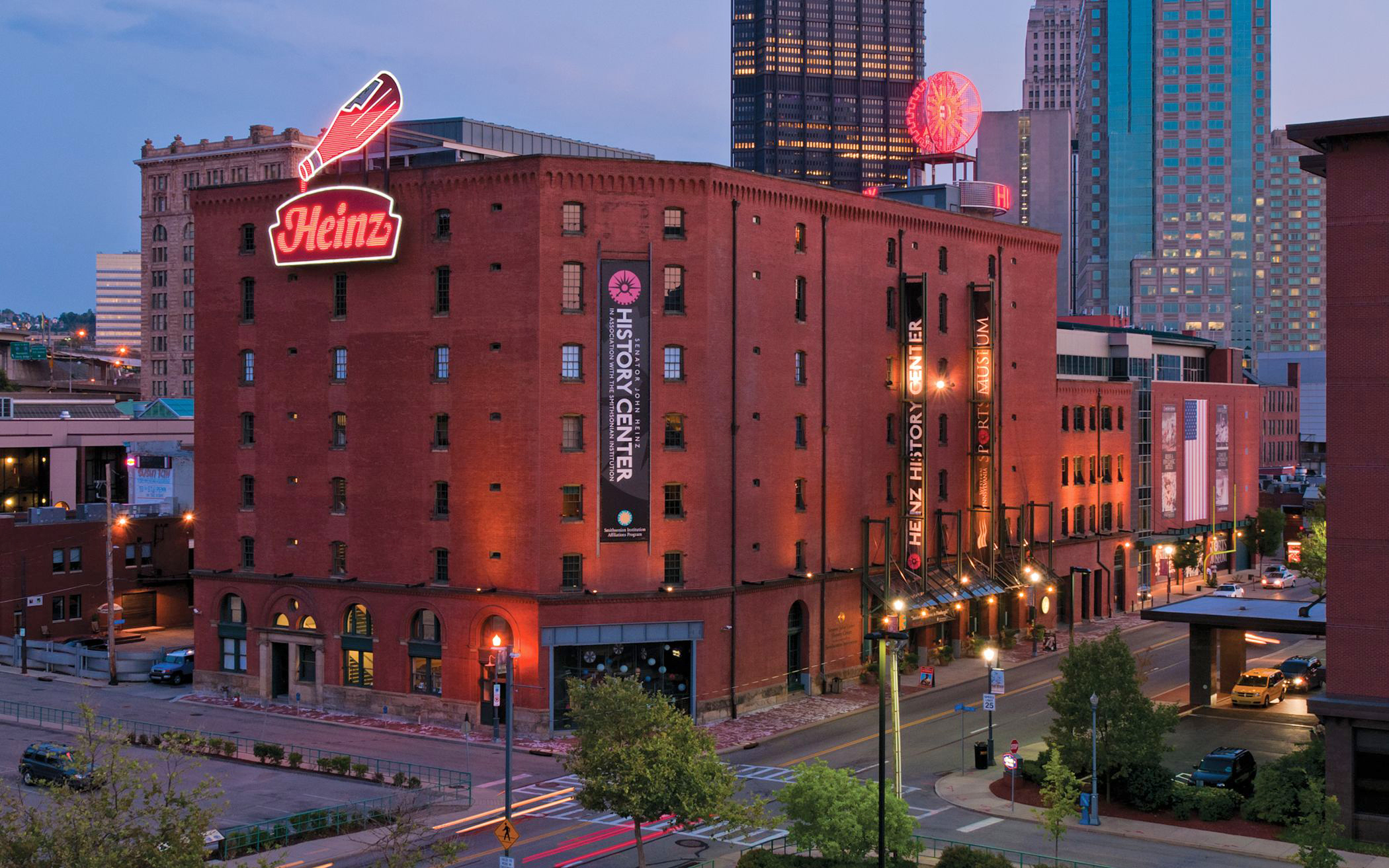
Senator John Heinz History Center

  • June 24 2026
  • Within Walking Distance
Overview
Getting To and From
Inside the Venue
Onsite Accessibility
Our Guidelines
Comments
About
The Senator John Heinz History Center, in Pittsburgh's historic Strip District at 1212 Smallman Street, is the Smithsonian's home in Pittsburgh, with six floors of interactive exhibitions exploring Western Pennsylvania history. The Western Pennsylvania Sports Museum is located on the second and third floors and is included with admission. The museum is open daily 10 a.m.–5 p.m. (closed New Year's Day, Easter, Thanksgiving, and Christmas); admission is $20 for adults, with free admission for all kids year-round.
Getting To and From
Features Information Available on Website Available at Venue Notes Additional Info / Things to Know Links
On Site Parking Garage or Lot
Yes
No
The History Center does not own or operate on-site parking; nearby lots, garages, and on-street parking are recommended (see Off Site Parking). Accessible parking is available in the surrounding lots. Accessible parking is available in the surrounding parking lots.
Drop Off/Pick Up Lanes/ Ride Share
No
No
Off site Parking
Yes
Yes
Four parking options within walking distance are recommended: the 11th and Smallman Street Lot, the Convention Center Garage, the Grant Street Transportation Center Garage, and the 13th and Smallman Street Lot. Limited on-street parking surrounding the museum is also available. The History Center does not own or operate the surrounding parking, so availability and pricing may vary; public transit is encouraged when possible.
Accessible Entrance
Yes
Yes
The History Center's galleries are wheelchair accessible, and accessible parking is available in the surrounding lots.
Site Map/Floorplan
Yes
Yes
A map of the History Center is available at the admissions desk.
Inside the Venue
Features Information Available on Website Available at Venue Notes Additional Info / Things to Know Links
Dedicated Accessible Entrance
Street Level Access and Automatic Doors
Security Checkpoint
Use of Mobility Aids
Yes
Yes
A limited number of manual wheelchairs and baby strollers are available to visitors on a first-come, first-served basis, located in the first-floor coat room. Service animals are always welcome. Free admission is granted to any therapeutic staff support, counselor, doctor, therapist, or nurse accompanying a visitor.
Accessible Seating (Theater)
No
Yes

Getting To and From

Find essential details on parking, drop-off points, and accessibility to make your visit smooth and hassle-free.
Check the table below for more information.
Features Information Available on Website Available at Venue Notes Additional Info / Things to Know Links
On Site Parking Garage or Lot
Yes
No
The History Center does not own or operate on-site parking; nearby lots, garages, and on-street parking are recommended (see Off Site Parking). Accessible parking is available in the surrounding lots. Accessible parking is available in the surrounding parking lots.
Drop Off/Pick Up Lanes/ Ride Share
No
No
Off site Parking
Yes
Yes
Four parking options within walking distance are recommended: the 11th and Smallman Street Lot, the Convention Center Garage, the Grant Street Transportation Center Garage, and the 13th and Smallman Street Lot. Limited on-street parking surrounding the museum is also available. The History Center does not own or operate the surrounding parking, so availability and pricing may vary; public transit is encouraged when possible.
Accessible Entrance
Yes
Yes
The History Center's galleries are wheelchair accessible, and accessible parking is available in the surrounding lots.
Site Map/Floorplan
Yes
Yes
A map of the History Center is available at the admissions desk.

Inside the Venue

Get to know what to expect indoors—from seating layouts to restrooms and concessions.
Features Information Available on Website Available at Venue Notes Additional Info / Things to Know Links
Dedicated Accessible Entrance
Street Level Access and Automatic Doors
Security Checkpoint
Use of Mobility Aids
Yes
Yes
A limited number of manual wheelchairs and baby strollers are available to visitors on a first-come, first-served basis, located in the first-floor coat room. Service animals are always welcome. Free admission is granted to any therapeutic staff support, counselor, doctor, therapist, or nurse accompanying a visitor.
Accessible Seating (Theater)
No
Yes

Onsite Accessibility

Learn about ramps, elevators, restrooms, and other accessible features available during your visit
Features Information Available on Website Available at Venue Notes Additional Info / Things to Know Links
Restrooms
Yes
Yes
Accessible restrooms are located on floors 1, 2, 3, and 6.
Elevators
Yes
Yes
An elevator is located next to the stairwell on the museum’s first floor.  The History Center's galleries are wheelchair accessible across its six floors, with accessible restrooms on floors 1, 2, 3, and 6, providing access to all public levels.
On-Site Dining
No
No
 
Theater, Auditorium, etc. (Museum)
Yes
Yes
The Senator John Heinz History Center — the Smithsonian's home in Pittsburgh — offers six floors of interactive exhibitions on Western Pennsylvania history, including the Western Pennsylvania Sports Museum on the second and third floors. Many exhibits have videos with closed captioning and induction loops. Assistive Listening Devices (personal amplification systems) are offered for General Public and Adult tours; sensory bags (fidgets, noise-reducing earmuffs and earplugs, sunglasses, and a flashlight) can be borrowed at no cost by leaving an ID; and sign-language interpreters are available for tours and programs with advance notice (412-454-6304 / reservations@heinzhistorycenter.org).
Our Guidelines
1. Make Accessibility Info Easy to Find - Dedicated Website Accessibility Page

Clearly post detailed accessibility information online, covering parking, entrances, interior pathways, site plans, and more.


2. Include All Mobility Devices

Consider walkers, canes, crutches — not just wheelchairs. Provide specifics for a variety of mobility needs. Include people who use different devices in the conversation.

3. Go Beyond ADA Compliance

ADA is the minimum. Strive for real-world accessibility through thoughtful design and ongoing improvements.

4. Visibility = Accessibility

If disabled visitors aren't present, barriers may exist. Transparency and preparation are the keys to inclusion. Empower everyone to attend.

Latest Places
 

blog
Jun 24 2026
blog
Jun 24 2026


Tags:
Share on:

Leave Your Comment Here