
 Accessibility Information
About
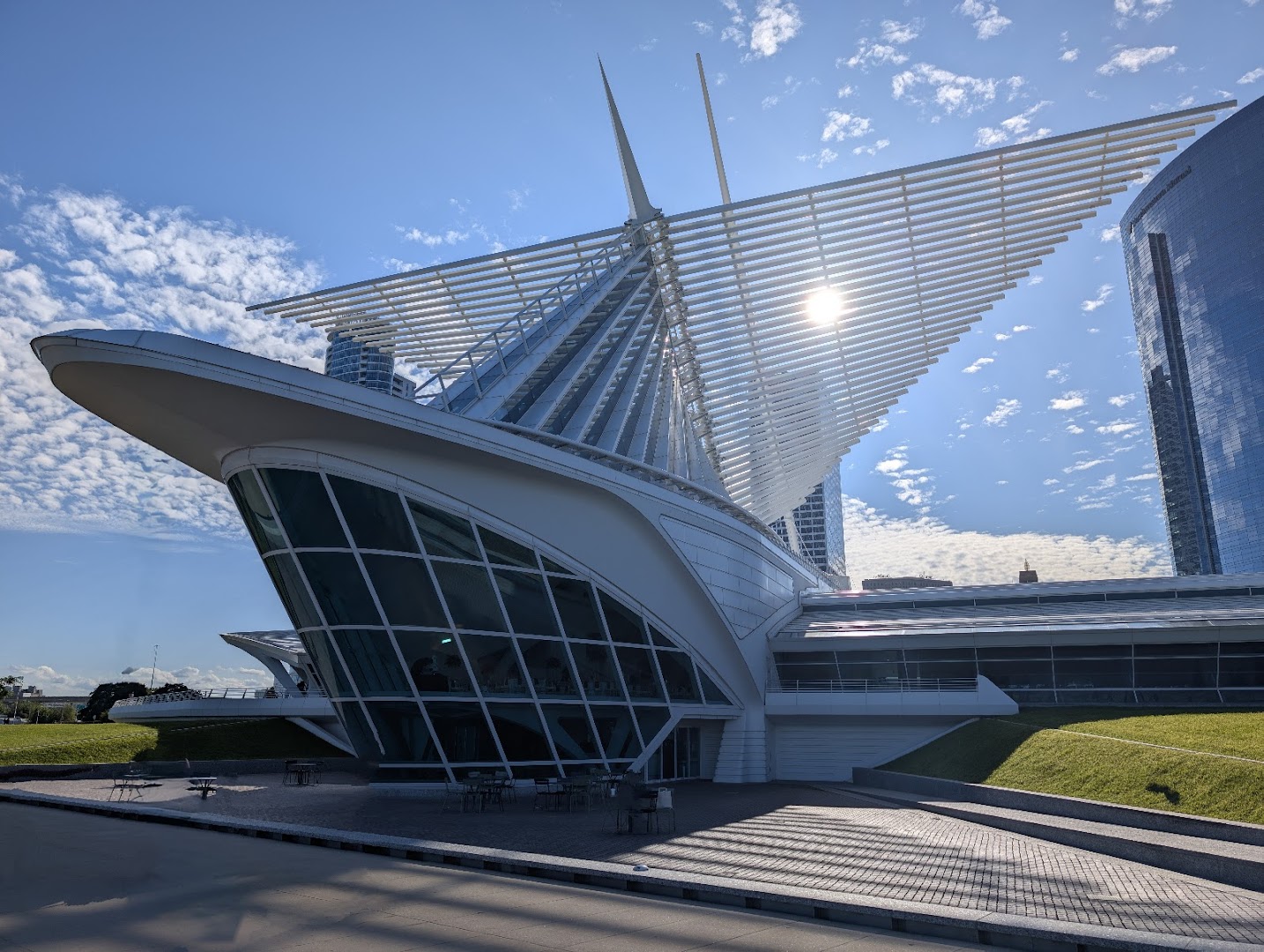
The Milwaukee Art Museum connects people with art, each other, and the world. From its roots in Milwaukee’s first art gallery in 1888, the Museum has grown to be Wisconsin’s largest art institution. Located on a 24-acre lakeside campus in downtown Milwaukee, it is a vital cultural resource and icon for the city.
More than 34,000 artworks from antiquity to today comprise the Museum’s expansive collection. American and European painting, sculpture, and decorative arts; conceptual and minimalist art; prints and drawings; photography and new media; modern and contemporary design; folk and self-taught art; and 20th-century Haitian art count among its strengths. Housed in buildings designed by architects Santiago Calatrava (2001), David Kahler (1975), and Eero Saarinen (1957), the Museum is an essential destination for both art and architecture.
At the center of every Milwaukee Art Museum experience is a driving mission to share extraordinary works of art, reveal their compelling stories, and create meaningful experiences that grow and inspire our community.
More than 34,000 artworks from antiquity to today comprise the Museum’s expansive collection. American and European painting, sculpture, and decorative arts; conceptual and minimalist art; prints and drawings; photography and new media; modern and contemporary design; folk and self-taught art; and 20th-century Haitian art count among its strengths. Housed in buildings designed by architects Santiago Calatrava (2001), David Kahler (1975), and Eero Saarinen (1957), the Museum is an essential destination for both art and architecture.
At the center of every Milwaukee Art Museum experience is a driving mission to share extraordinary works of art, reveal their compelling stories, and create meaningful experiences that grow and inspire our community.
Getting To and From
Inside the Venue
Getting To and From
Find essential details on parking, drop-off points, and accessibility to make your visit smooth and hassle-free.
Check the table below for more information.
Check the table below for more information.
Inside the Venue
Get to know what to expect indoors—from seating layouts to restrooms and concessions.
Onsite Accessibility
Learn about ramps, elevators, restrooms, and other accessible features available during your visit
Our Guidelines
1. Make Accessibility Info Easy to Find - Dedicated Website Accessibility Page
Clearly post detailed accessibility information online, covering parking, entrances, interior pathways, site plans, and more.
2. Include All Mobility Devices
Consider walkers, canes, crutches — not just wheelchairs. Provide specifics for a variety of mobility needs. Include people who use different devices in the conversation.
3. Go Beyond ADA Compliance
ADA is the minimum. Strive for real-world accessibility through thoughtful design and ongoing improvements.
4. Visibility = Accessibility
If disabled visitors aren't present, barriers may exist. Transparency and preparation are the keys to inclusion. Empower everyone to attend.
Latest Places
Oct 14 2026
Sep 30 2026
Sep 30 2026

Leave Your Comment Here