
 Accessibility Information
About
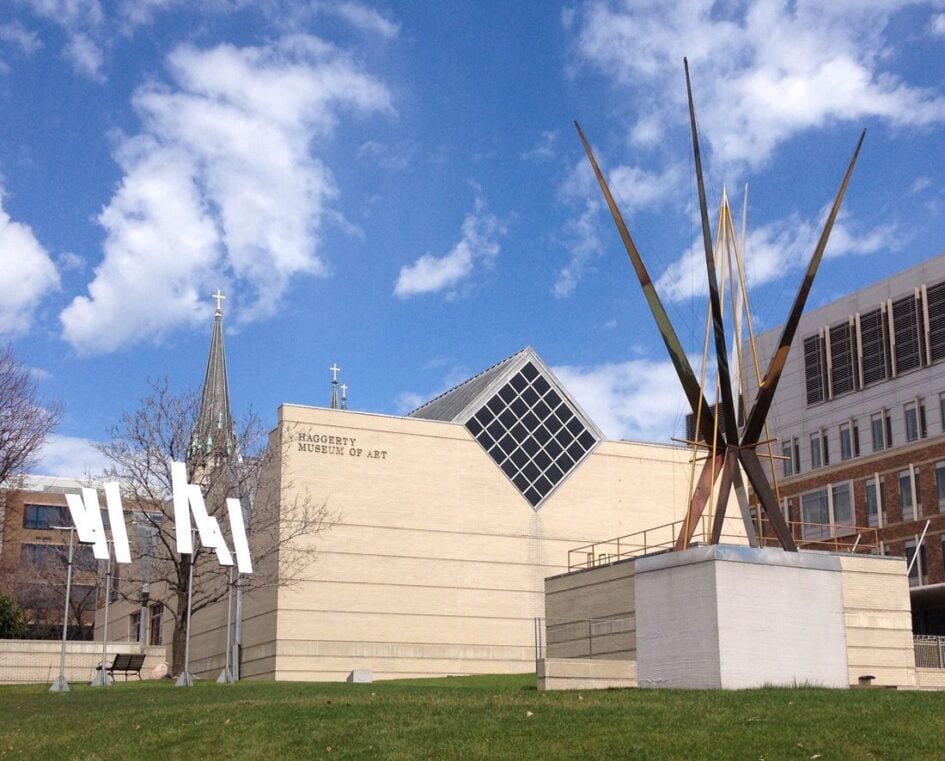
The Haggerty Museum of Art is Marquette University's art museum, at 1234 W. Tory Hill St. on the Marquette campus in Milwaukee, directly north of the 13th Street and Clybourn Street intersection. It opened on Nov. 11, 1984, presents about eight to nine exhibitions a year, and works as a teaching museum for the university while offering free tours, lectures, workshops and performances to the wider community. Admission is free, and the museum is open Monday through Saturday, 10 a.m. to 4:30 p.m., closed on Sunday and on Marquette's holidays. For access, the museum describes itself as ADA compliant and asks visitors to contact it for any special arrangements. The main entrance is on the west side of the building, facing into campus. Coming from the 13th and Clybourn corner means a flight of stairs and a slight hill, so the museum points visitors who need an ADA compliant route to Lot J, its free, limited parking lot at 601 N 11th St. Marquette's own access records add that the west entrance doors are wheelchair accessible but manual, with no door buttons, and that the elevator sits in the center of the museum with the restrooms opposite it on the main floor. The museum's own pages publish no floor plan, restroom or elevator details, so those interior facts come from Marquette and from Visit Milwaukee. Questions go to (414) 288-1669 or haggertym@marquette.edu.
Getting To and From
Inside the Venue
Getting To and From
Find essential details on parking, drop-off points, and accessibility to make your visit smooth and hassle-free.
Check the table below for more information.
Check the table below for more information.
Inside the Venue
Get to know what to expect indoors—from seating layouts to restrooms and concessions.
Onsite Accessibility
Learn about ramps, elevators, restrooms, and other accessible features available during your visit
Our Guidelines
1. Make Accessibility Info Easy to Find - Dedicated Website Accessibility Page
Clearly post detailed accessibility information online, covering parking, entrances, interior pathways, site plans, and more.
2. Include All Mobility Devices
Consider walkers, canes, crutches — not just wheelchairs. Provide specifics for a variety of mobility needs. Include people who use different devices in the conversation.
3. Go Beyond ADA Compliance
ADA is the minimum. Strive for real-world accessibility through thoughtful design and ongoing improvements.
4. Visibility = Accessibility
If disabled visitors aren't present, barriers may exist. Transparency and preparation are the keys to inclusion. Empower everyone to attend.
Latest Places
Sep 30 2026
Sep 30 2026

Sep 30 2026

Leave Your Comment Here